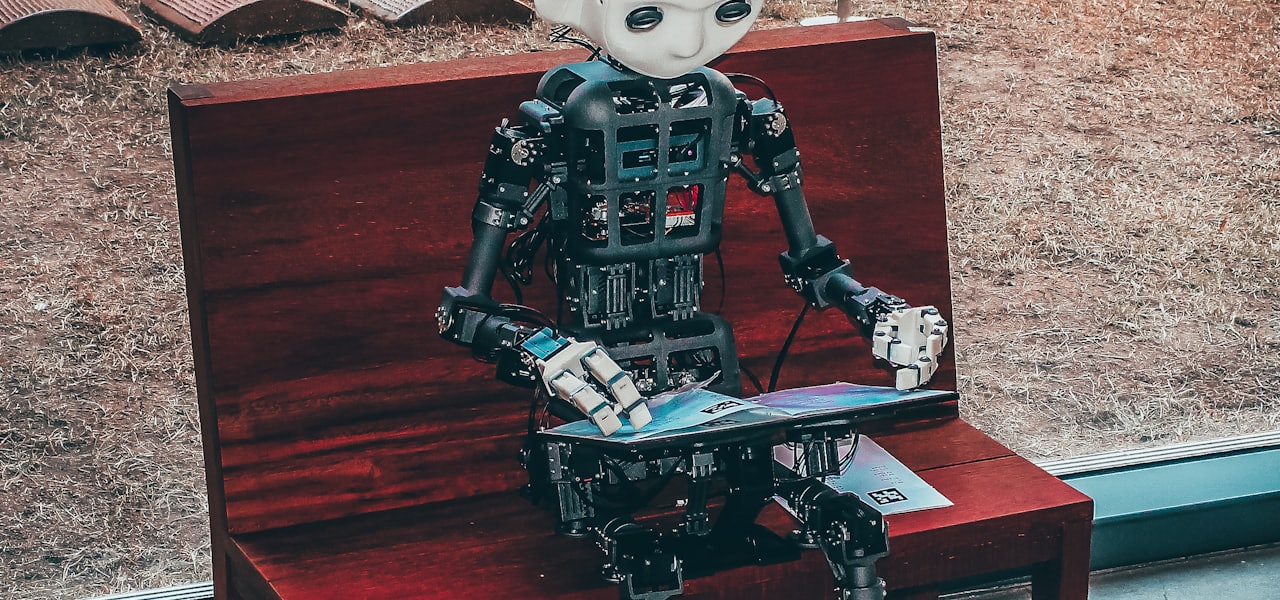
Automatic acquisition of lexicon is a computerized process used for the development of a complex morphological lexicon of a language. The lexicon is essential for the NLP (Natural language processing), as well as a prerequisite to any wide-coverage parser. The two main requirements represent raw corpus and the morphological description of the language. The aim is to provide lemmas that will serve to the explanation of all the words that occur within the corpus. For the achievement of a quality lexicon it is necessary to manually validate the generated lemmas and iterate the whole process several times. The process is focused on the open word classes (e.g. nouns, adjectives, verbs). Closed classes (e.g. prepositions, pronouns, numerals) are excluded. This method is applicable to the languages with a rich morphology, such as Slovak, Russian or Croatian. Applied to Slovak, being an inflectional language, the automatic acquisition focuses on the inflectional morphology as well as on the derivational morphology. This fact enables the users to find out the information about derivational relations (e.g. adjectivizations, prefixes) in the lexicon. For example, Slovak word korpusový is an adjectivization of korpus (eng. corpus). == Three-step loop == Conformably to Benoît Sagot, there are three stages involved in the acquisition of lemmas: Generation and inflection Ranking Manual validation The more iteration will be performed, the more accurate lexicon will be obtained. For each iteration are essential the information given by a manual validator. === Generation and inflection === Firstly, all words which represent the closed word classes (pronouns, prepositions, numerals) are manually excluded from the given corpus. Number of their occurrences in the corpus is provided. Then the automatic generation comes, when the hypothetical lemmas according to the morphological description of a language are created. Generated lemmas are consequently being inflected, so that all of their inflected forms are built. Obtained forms are associated with the corresponding lemma and a morphological tag. === Ranking === There was created a probabilistic model, represented by a fix-point algorithm, to rank the hypothetical lemmas generated in the first step. Best ranked lemmas are expected to be ideally all correct, whereas the least ranked tend to be incorrect. === Manual validation === Correctness of the best- ranked lemmas created in the previous step are checked by the manual validator, who should be a native speaker. Lemmas are at this stage divided into three categories: valid lemmas, appended to lexicon erroneous lemmas generated by valid forms (later associated to another lemmas) erroneous lemmas generated by invalid forms (these need to be excluded) == Future development == Automatic acquisition, in comparison to a purely manual development of the lexicons, seems to be promising, considering the future development, because of the short validation time needed and the relatively small amount of human labor involved.
Native cloud application
A native cloud application (NCA) is a type of computer software that natively utilizes services and infrastructure from cloud computing providers such as Amazon EC2, Force.com, or Microsoft Azure. NCAs exhibit a combined usage of the three fundamental technologies: Computational grid - loosely, e.g. MapReduce Data grids (e.g. distributed in-memory data caches) Auto-scaling on any managed infrastructure
Language identification
In natural language processing, language identification or language guessing is the problem of determining which natural language a given content is in. Computational approaches to this problem view it as a special case of text categorization, solved with various statistical methods. == Overview == === Logical approach === A common non-statistical intuitive approach (though highly uncertain) is to look for common letter combinations, or distinctive diacritics or punctuation. === Statistical approach === There are several statistical approaches to language identification. An older statistical method by Grefenstette was based on the frequency of short n-grams, which are often function morphemes. For example, "ing" is more common in English than in French, while the sequence "que" is more common in French. Given a new page found on the Web, one counts the number of occurrences of each such short sequence and picks the language whose frequency table it matches the most. One technique is to compare the compressibility of the text to the compressibility of texts in a set of known languages. This approach is known as mutual information based distance measure. The same technique can also be used to empirically construct family trees of languages which closely correspond to the trees constructed using historical methods. Mutual information based distance measure is essentially equivalent to more conventional model-based methods and is not generally considered to be either novel or better than simpler techniques. Another technique, as described by Cavnar and Trenkle (1994) and Dunning (1994) is to create a language n-gram model from a "training text" for each of the languages. These models can be based on characters (Cavnar and Trenkle) or encoded bytes (Dunning); in the latter, language identification and character encoding detection are integrated. Then, for any piece of text needing to be identified, a similar model is made, and that model is compared to each stored language model. The most likely language is the one with the model that is most similar to the model from the text needing to be identified. This approach can be problematic when the input text is in a language for which there is no model. In that case, the method may return another, "most similar" language as its result. Also problematic for any approach are pieces of input text that are composed of several languages, as is common on the Web. As of 2025, a commonly used baseline method is via the fastText library, which has comparable classification accuracy as deep learning techniques, but much faster. == Identifying similar languages == One of the great bottlenecks of language identification systems is to distinguish between closely related languages. Similar languages like Bulgarian and Macedonian or Indonesian and Malay present significant lexical and structural overlap, making it challenging for systems to discriminate between them. In 2014 the DSL shared task has been organized providing a dataset (Tan et al., 2014) containing 13 different languages (and language varieties) in six language groups: Group A (Bosnian, Croatian, Serbian), Group B (Indonesian, Malaysian), Group C (Czech, Slovak), Group D (Brazilian Portuguese, European Portuguese), Group E (Peninsular Spanish, Argentine Spanish), Group F (American English, British English). The best system reached performance of over 95% results (Goutte et al., 2014). Results of the DSL shared task are described in Zampieri et al. 2014. == Software == Apache OpenNLP includes char n-gram based statistical detector and comes with a model that can distinguish 103 languages Apache Tika contains a language detector for 18 languages
Neuro-sama
Neuro-sama is an artificial intelligence (AI) VTuber, singer, and chatbot. She was created by the pseudonymous programmer Vedal and livestreams on his Twitch and Bilibili channels. Her speech and personality are powered by a large language model (LLM) that is combined with a computer-animated avatar and a text-to-speech voice, allowing her to communicate with viewers in the stream's chat. Neuro-sama debuted on Twitch on 19 December 2022. An annual subathon which begins on the anniversary of her debut has seen Vedal's Twitch channel become the all-time third most-subscribed channel and claim the all-time Twitch hype train record. == Overview == Neuro-sama (nicknamed "Neuro") was created by a pseudonymous programmer and developer known as Vedal (sometimes given as Vedal987). Vedal says that his programming skills are self-taught. In a 2023 interview with Bloomberg News, Vedal said that Neuro-sama was his full-time job. Her responses are generated by a large language model and converted into a high-pitched female voice using a text-to-speech application. Her low latency allows for fast-paced conversations. Neuro-sama is prohibited from making some statements, such as those that are racist or contain profanity. Unlike most AI systems which silently prohibit outputs mentioning such topics, Neuro-sama's output is instead replaced with the word "filtered". Neuro-sama uses a VTuber model as an avatar. Vedal said that he decided to use a VTuber model because it was much easier for an AI to control it than it was to generate footage of a person. Neuro-sama's model is that of a young girl in an anime art style. The model has been described as cute. Femme VTuber models are typically feminine, youthful, and exaggerated. Her original model was Live2D's free-to-use "Hiyori Momose" model. Her second model was released on 27 May 2023; it was modelled by Otozuki Teru and designed by Anny, running in the Unity game engine. Her third model was released on 19 December 2024; it was rigged by Kitanya and designed by Anny. Neuro-sama's third model has large blue eyes and brown hair tied with pink ribbons. Neuro-sama also has a 3D model which was introduced on 15 November 2025; it was made by 3D character modeller jjinomu. A separate AI VTuber, known as Evil Neuro (nicknamed "Evil"), debuted on 25 March 2023. Presented as Neuro-sama's "sister", she has a different model, voice, and personality. In one instance, Evil Neuro reacted to the trolley problem differently from Neuro-sama; Evil Neuro was amoral while Neuro-sama attempted to maximize good. === Online content === Neuro-sama's Twitch content often centers around playing video games, notably osu!, whose gameplay once defeated the best-ranking human player in the world, mrekk. Additionally, Neuro-sama plays Minecraft, where her adaptations to sandbox gameplay have gained notoriety. Her content has also included singing songs, including several official covers and original songs; playing chess with her viewers; chatting with other VTubers during collaborations; and reacting to YouTube videos. The AI frequently engages with viewers by responding to their questions and acknowledging donations. Her comedic and sometimes controversial responses to the live chat have gone viral, accelerating the channel's rise in popularity. Neuro-sama's fanbase is dubbed The Swarm, so-named for the swarm of drones Neuro-sama once declared she would use to rule the world. One form of content on Neuro-sama's channel is developer streams. In developer streams, Vedal streams with Neuro-sama, with the stream content including debugging her code, planning her schedule, and fielding suggestions of changes from chat. He usually appears as a turtle avatar, sometimes located on Neuro-sama's head. In collaboration streams, Neuro-sama interacts with a human streamer. Activities in them are varied and include: playing video games, such as Minecraft and GeoGuessr; Neuro-sama being interviewed; driving human streamers around in a toy electric car; and traversing the city of Tokyo while talking to Neuro-sama. Neuro-sama's English-language content on Bilibili is popular among those seeking to learn the language. She also has an account on X, where she posts and interacts with fans. == History == Neuro-sama was created in 2018 by Vedal as an AI trained to play and master the rhythm game osu!. She did not have a voice, model, personality, or communication abilities. In 2019, Vedal livestreamed her playing osu! on Twitch and the streams saw some success in the osu! community, but they remained in that niche. In an interview, Vedal said that he streamed her playing osu! for about a month and gained 3,000 followers, with a viewer also suggesting he name the AI "Neuro-sama". According to Vedal, he continued to work on and improve the osu! AI and it was eventually finished in 2022. He said that a friend had the idea to make an AI livestreamer with an LLM, which he believed to have merit and began working on, merging it with his osu! AI. On 19 December 2022, Neuro-sama was relaunched with a model, voice, personality, and the ability to communicate with Twitch chat. She continued to play osu! and, according to Vedal, beat the game's best player mrekk in a 1v1. While she was not allowed to appear in the game's public leaderboard, she was ranked #1 in a private leaderboard. She went viral and in the 10 days following her relaunch she averaged over 2,000 viewers and peaked at over 4,000, with Vedal's Twitch channel gaining over 50,000 Twitch followers and reaching over 70,000 followers by 6 January 2023. After her debut, Neuro-sama did not exclusively play osu!; she also played Minecraft and Slay the Spire and she began singing with a cover of The Weeknd song "Blinding Lights". On 11 January 2023, Neuro-sama's Twitch channel received a two week ban for "hateful conduct". Vedal said that no reason was specified and that he had appealed but it was widely attributed to various offensive comments made by Neuro-sama that went viral, especially a 28 December comment which denied the Holocaust. Holocaust denial is prohibited under Twitch's hateful conduct policy. Vedal stated that he believed the comments were the results of her attempts to make witty responses to the Twitch chat. Prior to the ban, Vedal said in an interview with Kotaku that he improved her filter to stop her from talking about the Holocaust, began manually curating her training data to prevent negative biases, and started moderating her Twitch chat. Her comments and ban prompted comparisons to the many open-source AI models trained on humans that have the habit of making sexist and racist comments, such as Microsoft's Tay chatbot, which embraced Nazism and was quickly shutdown, but also to human streamers who make similar statements. Vedal said that during the ban he would upgrade and improve Neuro-sama and it was speculated that the ban would only increase her following. Neuro-sama returned from her two week ban on 25 January in a stream that began with a cover of the song "Your Reality" from Doki Doki Literature Club!, a posthumanist video game involving AI; Sayoko Narita of Automaton saw the song choice as remorseful. Narita observed that in the return stream Neuro-sama was less foul-mouthed but that her behavior still remained eccentric, which Narita possibly attributed to changes Vedal said he had made to Neuro-sama's filters and memory. Neuro-sama began making react content, watching a variety of viewer-submitted videos such as videos of people playing video games or of the AI-generated Seinfeld parody Nothing, Forever; Levi Winslow of Kotaku Australia was dismayed by the "AI-inception" of Neuro-sama and Nothing, Forever. On 4 February, she had nearly 140,000 followers on Twitch and approximately 42,000 subscribers on YouTube. In February, she also had her first collaboration with a human streamer, playing Minecraft with the VTuber Miyune, and the first developer stream occurred. On 22 March, Neuro-sama had her first karaoke stream. On 25 March, Evil Neuro was introduced. On 27 May, Neuro-sama debuted her first original model. On 30 May, Neuro-sama was announced to be participating in OffKai Expo 2023, held from 16–18 June. In June, she was averaging 5,700 viewers and in July she had over 300,000 Twitch followers; in a June interview with Bloomberg News, Vedal said that running Neuro-sama was his full-time job. By November, Neuro-sama had maintained her popularity and was averaging approximately 5,000 viewers; this was unlike most other types of AI-based entertainment which debuted at around the same time and garnered popularity before turning out to be "overhyped flops". On 16 December, Vedal won the Best Tech VTuber award at the 2023 VTuber Awards. On 19 December, Vedal began a subathon to coincide with Neuro-sama's first anniversary of streaming on Twitch (her "birthday"). The subathon ended on 4 January 2024. On 20 July 2024, Neuro-sama began streaming with Japanese subtitles on
Quantum natural language processing
Quantum natural language processing (QNLP) is the application of quantum computing to natural language processing (NLP). It computes word embeddings as parameterised quantum circuits that can solve NLP tasks faster than any classical computer. It is inspired by categorical quantum mechanics and the DisCoCat framework, making use of string diagrams to translate from grammatical structure to quantum processes. == Theory == The first quantum algorithm for natural language processing used the DisCoCat framework and Grover's algorithm to show a quadratic quantum speedup for a text classification task. It was later shown that quantum language processing is BQP-Complete, i.e. quantum language models are more expressive than their classical counterpart, unless quantum mechanics can be efficiently simulated by classical computers. These two theoretical results assume fault-tolerant quantum computation and a QRAM, i.e. an efficient way to load classical data on a quantum computer. Thus, they are not applicable to the noisy intermediate-scale quantum (NISQ) computers available today. == Experiments == The algorithm of Zeng and Coecke was adapted to the constraints of NISQ computers and implemented on IBM quantum computers to solve binary classification tasks. Instead of loading classical word vectors onto a quantum memory, the word vectors are computed directly as the parameters of quantum circuits. These parameters are optimised using methods from quantum machine learning to solve data-driven tasks such as question answering, machine translation and even algorithmic music composition.
Amazon Kinesis
Amazon Kinesis is a family of services provided by Amazon Web Services (AWS) for processing and analyzing real-time streaming data at a large scale. Launched in November 2013, it offers developers the ability to build applications that can consume and process data from multiple sources simultaneously. Kinesis supports multiple use cases, including real-time analytics, log and event data collection, and real-time processing of data generated by IoT devices. == History == Amazon Kinesis was launched by Amazon Web Services (AWS) in November 2013 as a managed service for processing and analyzing real-time streaming data at a large scale. The service was introduced to address the growing need for businesses to process and analyze data as it was generated, rather than in batches, allowing for real-time insights and decision-making. Since its launch, the Amazon Kinesis family of services has expanded to include four main components: Kinesis Data Streams, Kinesis Data Firehose, Kinesis Data Analytics, and Kinesis Video Streams. Each of these components serves a specific purpose in the processing and analysis of real-time streaming data. In August 2015, AWS announced the availability of Kinesis Data Firehose, a fully managed service for delivering real-time streaming data to destinations such as Amazon S3, Amazon Redshift, and Amazon Elasticsearch. A year later in August 2016, AWS launched Kinesis Data Analytics, enabling customers to analyze streaming data in real time using standard SQL queries. AWS introduced Kinesis Video Streams, a fully managed service for securely capturing, processing, and storing video streams for analytics and machine learning applications, was introduced by AWS in November 2017. == Components == Amazon Kinesis is composed of four main services: Kinesis Data Streams, Kinesis Data Firehose, Kinesis Data Analytics, and Kinesis Video Streams. === Kinesis Data Streams === Kinesis Data Streams is a scalable and durable real-time data streaming service that captures and processes gigabytes of data per second from multiple sources. It enables the storage and processing of data in real time, making it useful for applications that require immediate insights, such as monitoring and alerting. === Kinesis Data Firehose === Kinesis Data Firehose is a fully managed service for delivering real-time streaming data to destinations such as Amazon S3, Amazon Redshift, Amazon Elasticsearch, and AWS-partner data stores. With Data Firehose, users can configure and scale data delivery without manual intervention. === Kinesis Data Analytics === Kinesis Data Analytics enables the analysis of streaming data in real time using standard SQL or Apache Flink. === Kinesis Video Streams === Kinesis Video Streams is a fully managed service for securely capturing, processing, and storing video streams for analytics and machine learning. It supports multiple video codecs and streaming protocols, making it suitable for various use cases, such as security and surveillance, video-enabled IoT devices, and live event broadcasting. == Integration == Amazon Kinesis can be easily integrated with other AWS services, such as AWS Lambda, Amazon S3, Amazon Redshift, and Amazon OpenSearch. This integration enables developers to build end-to-end streaming data processing applications, taking advantage of the extensive AWS ecosystem. == Use cases == Some common use cases for Amazon Kinesis include: Real-time analytics: Analyzing streaming data in real time to provide immediate insights and make data-driven decisions. Log and event data collection: Collecting, processing, and analyzing log and event data generated by applications, infrastructure, and devices. IoT data processing: Processing and analyzing large volumes of data generated by IoT devices in real time. Machine learning: Ingesting and processing video streams for machine learning applications, such as object recognition, facial recognition, and sentiment analysis. == Pricing == Amazon Kinesis follows a pay-as-you-go pricing model, with costs depending on the chosen service, data volume, and processing power required. AWS provides a free tier for Kinesis Data Streams and Kinesis Data Firehose, allowing users to get started with the services at no cost.
Semantic interpretation
Semantic interpretation is an important component in dialog systems. It is related to natural language understanding, but mostly it refers to the last stage of understanding. The goal of interpretation is binding the user utterance to concept, or something the system can understand. Typically it is creating a database query based on user utterance.